
梅花三弄
Chinese conservationist explores community-based wildlife protection in Kenya_我的网站

一 |
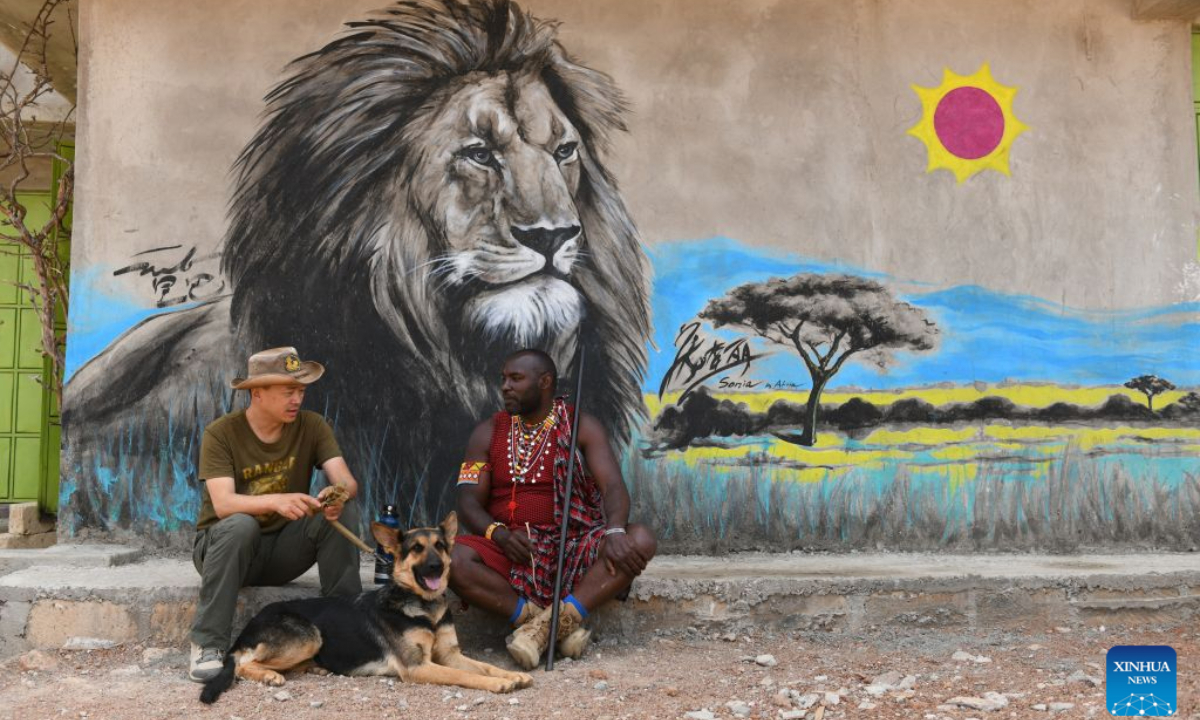
Among them is Chinese conservationist Zhuo Qiang, nicknamed "Simba," the Swahili word for lion. For him, this early-morning routine is driven by a broader mission to achieve human-wildlife coexistence.
In 2010, Zhuo left his job in China at the age of 37 and embarked on a less-traveled path: pursuing wildlife conservation in Kenya.
Without professional training in wildlife conservation, he found himself in a territory then dominated by Western organizations and local practitioners.
But Zhuo decided to stay. "I wanted to prove that Chinese people could also do wildlife conservation," he said.
Initially, Zhuo saw conservation largely through the lens of wildlife science: working in the field, studying animals and collecting data.
Living and working with Maasai communities changed that perspective. "The fate of wildlife was closely tied to the people sharing the same land," he said.
In the Maasai Mara ecosystem, livestock grazing is deeply connected to the livelihoods of pastoral communities. "If local people are asked to stop grazing but are given no alternative source of income, conservation cannot be sustainable," Zhuo said.
That principle laid the foundation for his work with the local community in establishing the Ol Kinyei Conservancy.
The area had suffered from prolonged overgrazing, with plants and the land itself deteriorating. Under the conservation model, local grazing land was leased and gradually restored, allowing vegetation to recover and creating a more suitable habitat for wildlife, said Zhuo.
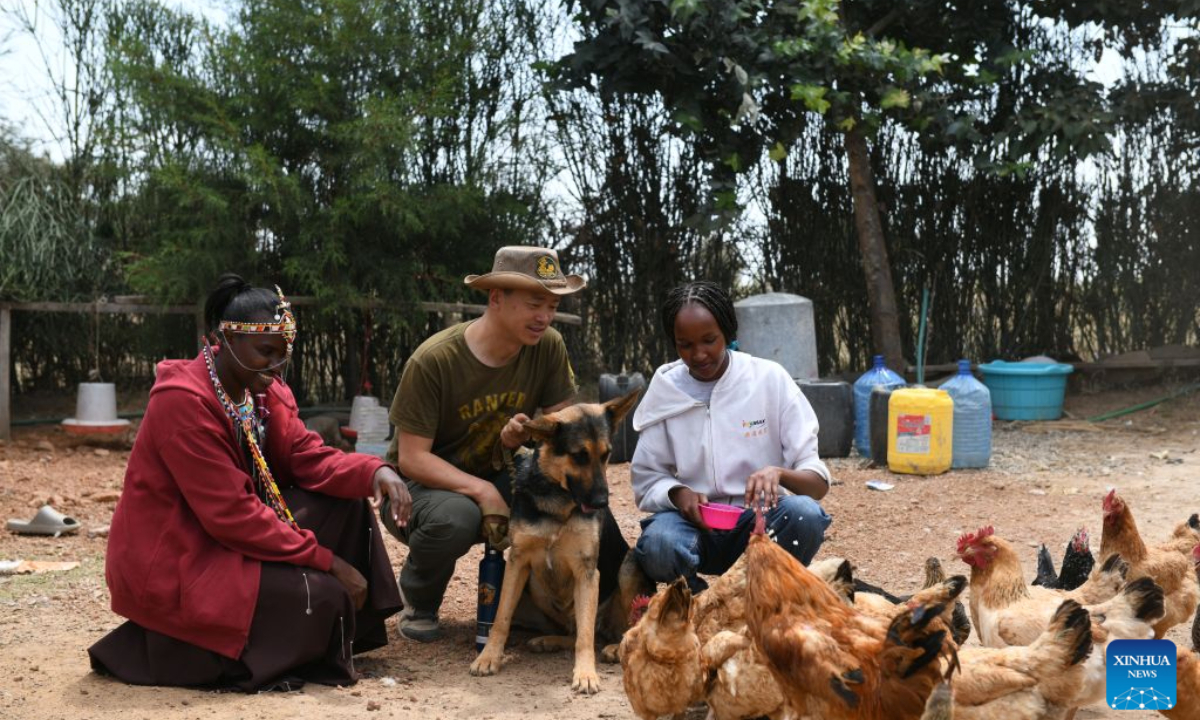
Meanwhile, households participating in the scheme receive land-rental income and have access to jobs such as wildlife rangers and tourism workers. Their average annual income has increased from around 500 U.S. dollars to about 3,700 dollars, according to Zhuo.
Some residents from surrounding communities also learned from the experience and brought the approach back to their own grazing areas.
Nowadays, 26 private conservancies have been established around the Maasai Mara National Reserve, covering about 1,600 square km, according to Zhuo.
He believes the network of community conservancies provides additional safe space for wildlife to move and survive, extending conservation efforts beyond the boundaries of a single national reserve and into surrounding communities.
Simon Msago, a Maasai community leader in Ngoswani, said Zhuo's work encouraged more residents to take an active role in conservation.
In the past, many residents saw few direct benefits from wildlife conservation and had limited awareness of its importance. Today, community members are increasingly willing to work as rangers and protect wildlife, creating an effective layer of protection around the conservancies, Msago said.
"Human-wildlife conflict cannot be solved simply through restrictions and prohibitions. The key is to create alternative sources of income so that residents can gain tangible benefits from conservation," Zhuo said.
"That is what makes community-based conservation sustainable -- allowing local people to become part of wildlife conservation rather than bystanders with no stake in it."
While continuing his work in the Maasai Mara, Zhuo has also sought to strengthen exchanges between China and Africa in wildlife conservation.
In recent years, he has visited more than 30 nature reserves and national parks in China, sharing his experiences of community-based conservation in Africa with Chinese counterparts.
"Conservation practices in China and Africa each have their own characteristics, and there is much that the two sides can learn from each other," he added.
。
原标题:南中轴再现“南囿秋风”风貌位于规划南苑森林湿地公园范围内的久敬庄公园已面向市民开放 本报讯(记者 蒲长廷)鸟叫蝉鸣、流水潺潺,走进南苑森林湿地公园,仿佛置身绿色的海洋。北京青年报记者从丰台区获悉,南苑森林湿地公园占地508亩的B地块园林建设及南苑公园改造提升工程已完工,再现“南囿秋风”历史风貌。在建设的过程中,结合了空地和林地更新,昔日的村庄拆迁、建筑垃圾堆筑的渣土山,恢复了溪流浅滩、草甸林地景观,再现南苑沼泽水淀、天然野趣、鸥鹭翔集的风貌,在使城市“绿肺”增加的同时也提升了区域生物多样性和生态系统稳定性。北青报记者了解到,南苑森林湿地公园地块曾聚集着村镇工厂、批发市场、物流仓储,环境脏乱差,安全隐患重重,周边的居民群众怨声载道,丰台区紧紧扭住“疏解非首都功能”这个牛鼻子,进行疏解腾退后,建成了南苑森林湿地公园。如今,这里已经成为首都中心城区最大的绿色开放空间、南中轴上一片大型城市生态绿肺。南森公司相关负责人介绍,南苑森林湿地公园规划面积17.5平方公里,其中丰台区面积15.6平方公里,结构为“一轴两带、两核六区”,在构建首都南部结构性生态绿肺的同时, 深入挖掘了南苑历史文化内涵,再现了“南囿秋风”历史风貌,使南苑地区成为了高质量发展的绿色引擎,引领南苑地区功能和品质全面跃升。同时,还规划布局了泡子湿地、海子森林、槐新森林、一亩古泉、高台望迥、槐房清源、御道文苑、飞放森林等八大特色景区,提供湿地游览、森林运动、科普教育等多元功能,最大限度满足游人需求,布局健康绿道。通过一系列科学的顶层设计,建成后的南苑森林湿地公园可为市民提供亲近自然、全龄友好的活动场所,促进人与自然和谐共生,满足人民美好生活需要,充分发挥地区生态服务价值,同时全面提升地区环境品质,促进高质量发展。南苑森林湿地公园的建设提升使区域生态效应日益体现。其生态效应体现在防风、固沙、保持水位,吸附粉尘,吸收二氧化碳释放氧气,隔离削减噪音等诸多方面。据了解,目前,南苑森林湿地公园已初具服务周边市民群众游览条件,2021年十一期间,公园被花草树木装扮成为一个色彩斑斓的世界,周边市民群众共计入园超过24600余人次,市民群众或在公园遛弯、或广场走秀、或打卡拍照、或悠闲地吹着萨克斯,形成一片温馨和谐的景象。
。
二 | “下一步,丰台区将紧紧围绕‘妙笔生花看丰台’美好愿景,全面推进城市南部地区加快发展行动计划,通过南苑森林湿地公园先行启动区建设、平原造林、留白增绿建设等重点项目的实施,改善生态环境,促进城乡森林文化、生态旅游业的全方位可持续发展,加快‘森林城市,宜居丰台’的实现步伐。

三 | ”丰台区生态环境局相关负责人介绍。摄影/本报记者 杨益返回搜狐,查看更多责任编辑:
Current article:http://7hr9ed.linlangdouwaqiexusan.bond/36peen/20260826/1126623.htm
Published on:05:04:46
上一篇:自主可控周期: AI算力需求倒逼国产替代与科创芯片设计ETF天弘(589070)的投资逻辑分析
下一篇:室内温度能降低4~6℃ 建筑立面能随着日照角度等变换光影色泽 这款光伏幕墙为城市低碳转型提供了“好看又实用”的杭州方案
下一篇:室内温度能降低4~6℃ 建筑立面能随着日照角度等变换光影色泽 这款光伏幕墙为城市低碳转型提供了“好看又实用”的杭州方案
 深耕投资主题——第二十六届投洽会亮点前瞻
 年终奖似乎不见了:富士GFX 100第一批工程样机曝光
 Soybean trade drives China-U.S. farm ties
 邮报:埃弗顿不打算买断布罗亚,除非切尔西降低球员的买断费
 货运车辆跑高速充电更方便了 浙江高速服务区迄今最大规模重卡充电站投运
 没有AI味的AI音乐来了,Mureka V9.5交出满分音乐答卷
我的网站最新内容
- ·转会费将超3500万!记者:布伦特福德接近签21岁西汉姆后卫迪乌夫
- ·建昌多部门联合开展禁烧督导行动
- ·科学家逆向工程将Starlink作为定位卫星 精度最高可达1米
- ·Rajinikanth's Padayappa Re-Release Crosses Rs 12 Crore Collections Worldwide
- ·Autoworkers add key Stellantis pickup truck plant to strikes
- ·2026湘湖半马将于10月18日鸣枪起跑
- ·巴特勒季后赛单场至少25分7板6助5断 2020年以来首次有人做到
- ·湖人记者:扎伊尔·威廉姆斯或成湖人最佳引援之一
- ·"I Don’t Want Navya to Get Married" - Jaya Bachchan
- ·武汉现在共用更衣室:最贵的费用是45分钟58元,都是名牌。
- ·拱墅以法治为笔书写基层善治答卷
- ·奋进新征程 建功新时代·非凡十年丨美丽中国展新颜——新时代中国生态文明建设述评_潜鸭_乌江
- ·中央网信办深入推进网络娱乐团播乱象整治工作
- ·补时绝杀取胜,安切洛蒂社媒:就是要拿出这样的态度!
- ·年中发布的AMD7NMRyzen处理器123:对PCIe4.0的开创性支持
- ·“零门槛”回收新模式上线 资源不浪费居民获实惠
我的网站热点内容
- ·兴城八届市委常委会召开第一百五十三次会议
- ·火箭抢22个进攻板!科尔:错误必须要纠正 不能让对手为所欲为
- ·6月30日正式上市 配置升级 新款MG5实车亮相
- ·电讯报:曼联去年前场重组获得信心 分散资金签3名中场而非砸1人
- ·Single bar bench outside Beijing school hailed as model design
- ·[税务]税务部门助力旅游服务热辣升级
- ·河北五超·微视频|看台上的手势 藏着球迷的城市情怀与赛场信仰
- ·限时尊享价35.49万起 新款沃尔沃XC60插混版车型正式上市
- ·记者的五超Vlog丨第一次看五超,我被圈粉了!
- ·一边坦途一边幸福!邯郸这个路口凭什么让全网奔赴
- ·冲击豪华旗舰 配置到顶 质感拉满的尊界S800怎么选
- ·钱塘区持续擦亮“银耀钱塘”企退文化品牌
- ·国家统计局:1—7月份我国投资新动能增势良好
- ·신한금융, 비자(VISA)와 손잡고 스테이블코인 금융 실험 나선다
- ·Florida law targeting drag shows can't be enforced for now, appellate court says
- ·《大东北》为何选择抚顺?雷锋精神背后的故事即将揭晓